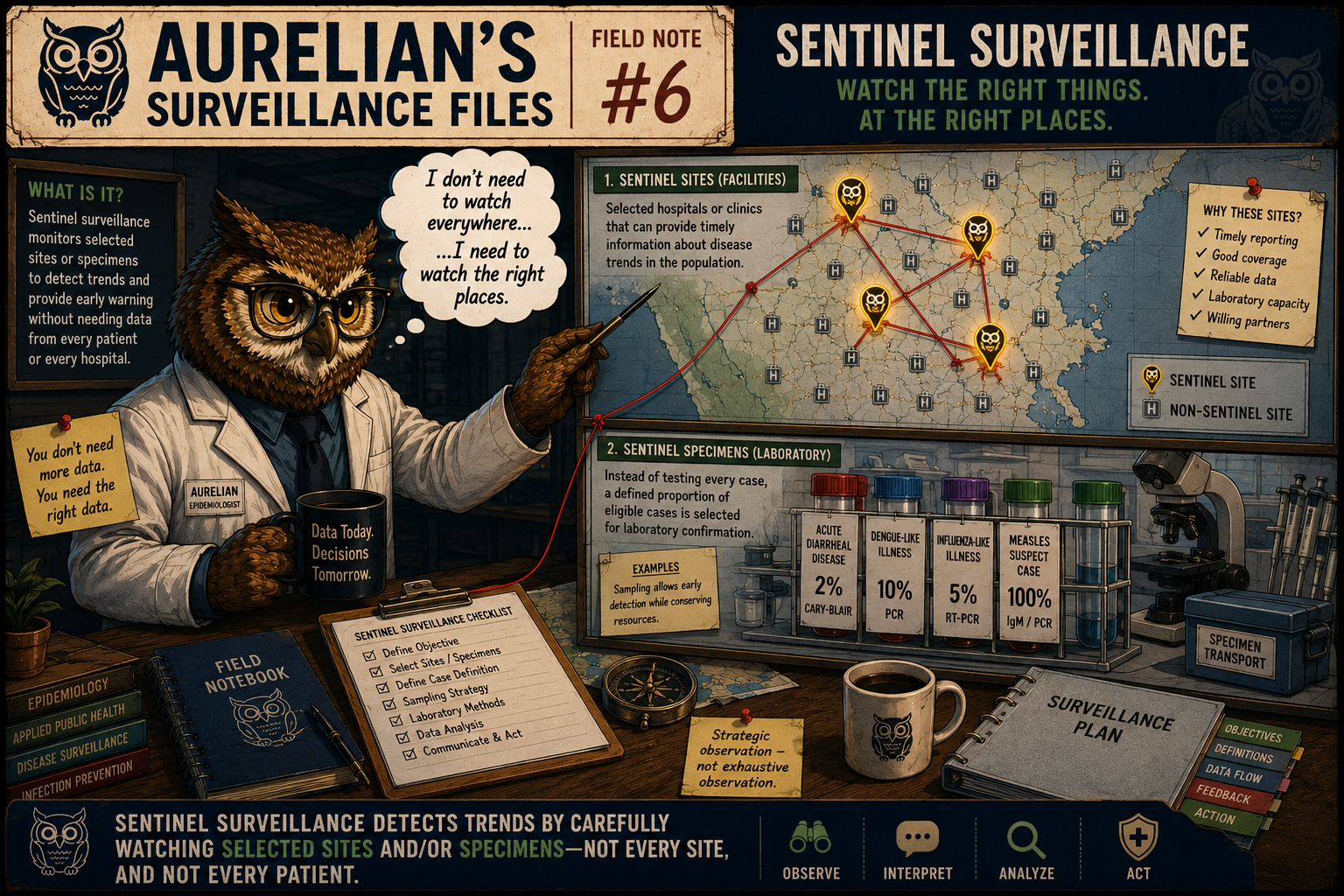
Sentinel Surveillance: You Don’t Need to Watch Everything—You Need to Watch the Right Things

Aurelian’s Surveillance Files Field Note #6 — Sentinel Surveillance Good surveillance is not measured by how much data we collect, but by whether we collect the right data at the right time to support better decisions. In recent Field Notes, we have looked at how surveillance systems classify disease, recognize patterns before diagnoses are confirmed, … Read more

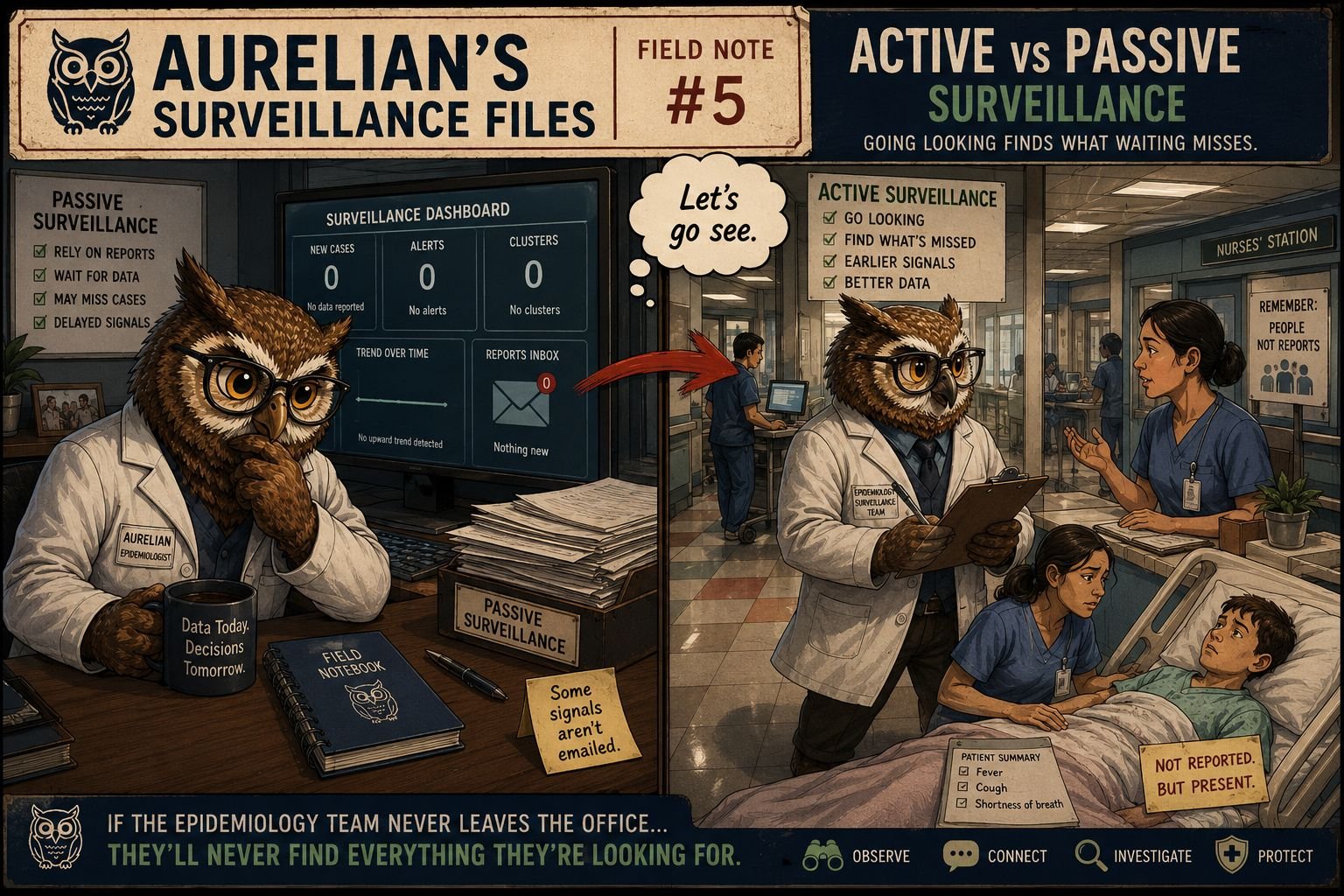
Active vs. Passive Surveillance: Sometimes the Best Surveillance Happens Away from the Desk

Aurelian’s Surveillance Files Field Note #5 — Active vs. Passive Surveillance Surveillance does not always come to the epidemiologist. Sometimes the epidemiologist has to go looking for it. In recent Field Notes, we have looked at how surveillance systems use case definitions to classify disease and how syndromic surveillance can reveal a pattern before a … Read more

Syndromic Surveillance: Seeing the Pattern Before Knowing the Diagnosis

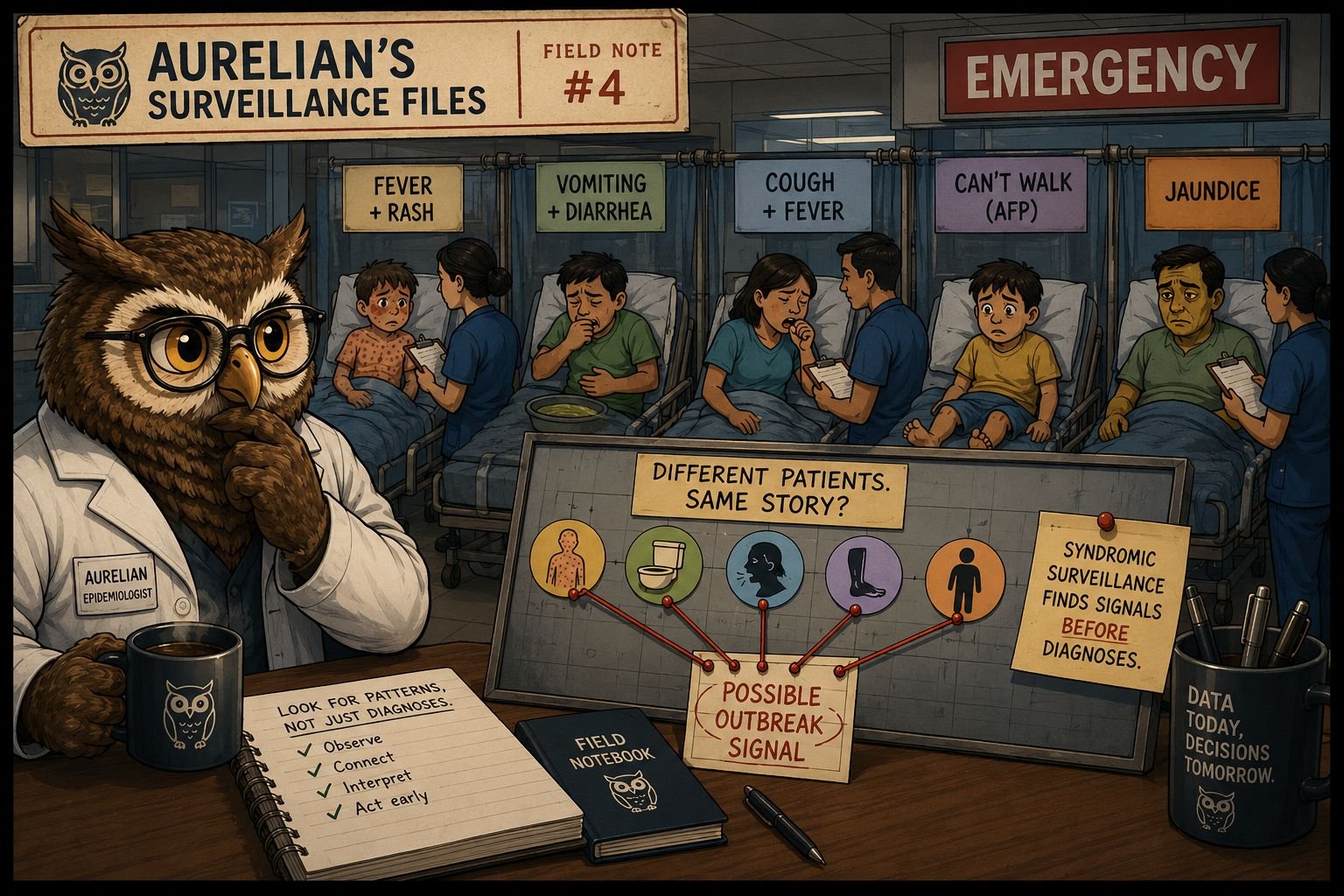
Every outbreak begins with individual patients. Syndromic surveillance helps us recognize when their separate stories are becoming one larger story. In the previous Field Note, we considered why surveillance case definitions must change as the evidence changes. Good surveillance is not rigid. It adapts as diseases emerge, knowledge improves, and public health priorities shift. This … Read more

Case Definitions Evolve: Good Surveillance Adapts to New Evidence

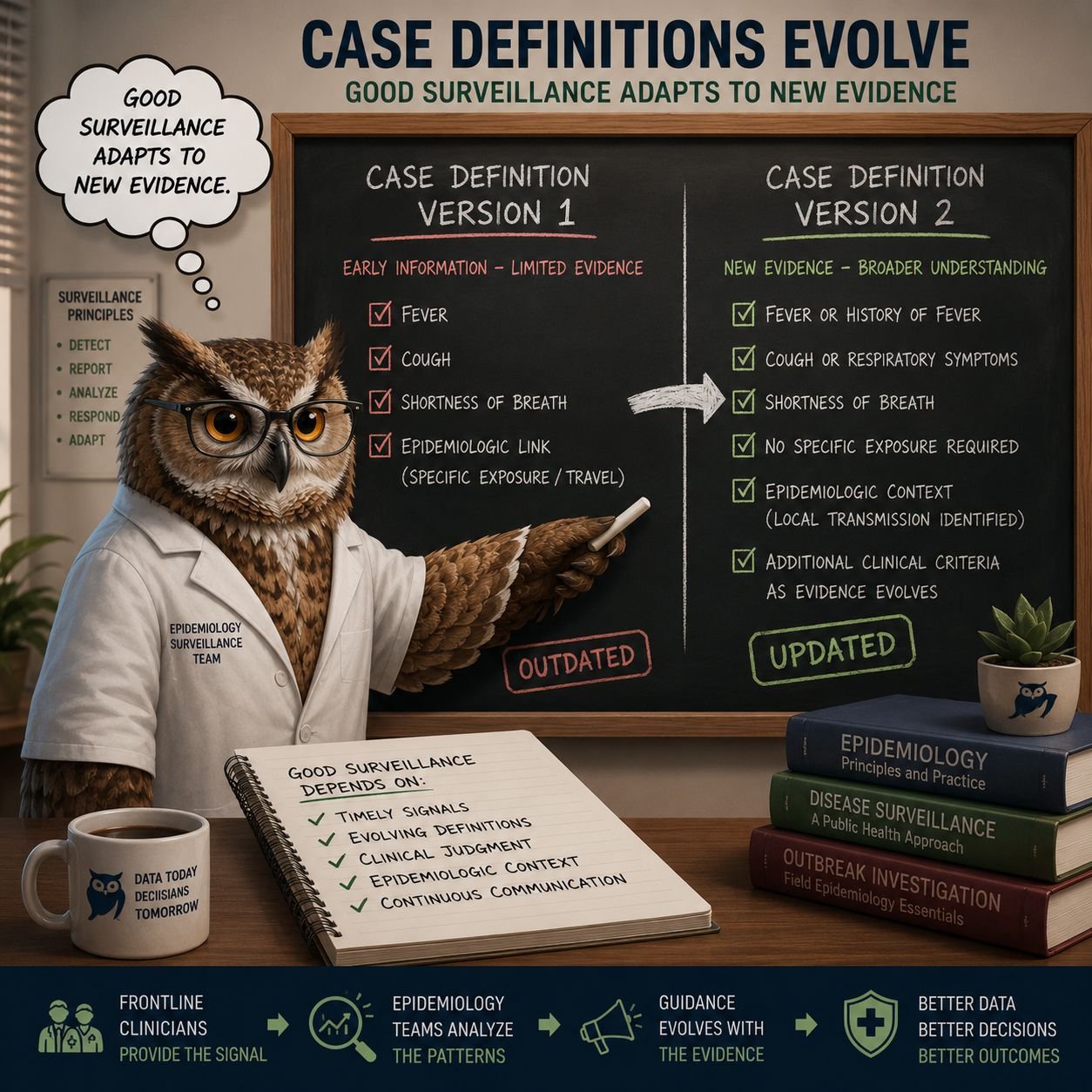
Aurelian’s Surveillance Files Field Note #3 — Case Definitions Evolve A case definition is not a diagnosis. It is a surveillance tool used to recognize, classify, and monitor disease consistently. Like science itself, it must evolve as the evidence changes. In the previous Field Note, we examined epidemiologic silence and why an absence of reports … Read more

Epidemiologic Silence: When No Reports Do Not Mean No Disease

Aurelian’s Surveillance Files Field Note #2 — Epidemiologic Silence One of the most dangerous messages a surveillance system can send is silence—not because silence proves there is no disease, but because it may conceal the absence of reporting. Last week, we explored the difference between surveillance and research, emphasizing that surveillance exists to support timely … Read more

Surveillance vs. Research: Same Data, Different Purpose

Aurelian’s Surveillance Files Field Note #1 Collecting data is only the beginning. What matters is understanding why we collect it—and what we intend to do with it. One of the most common misunderstandings in healthcare is the belief that surveillance and research are essentially the same thing. They are not. Both involve collecting, analyzing, and … Read more